


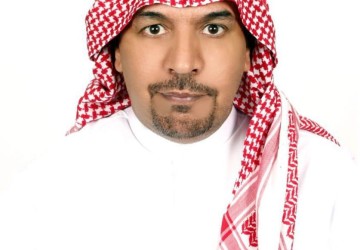
Poetry and poets have a special place in people’s hearts. So, poets are appreciated by their communities, especially by poetry lovers. Muhammad Robian Al-Juraishi is one of these famous poets; he is a talented and exceptional poet who has made a permanent mark on the hearts of many. Al-Juraishi began his poetic journey at a young age because his family and environment encouraged him to take an interest in poetry. In both Al-Qualtah and Nabati poetry, he is considered one of the most talented poets. His active involvement in all kinds of literary festivals and his prominent role as the representative of his tribe at poetry events gave him the title of Lisan Qabilat Abs (لسان قبيلة عبس) meaning voice of Abs tribe. This title reflects his unique place among the giants of Arabic poetry because he masterfully bridged the traditions of Qualtah and Nabati poetry.
Qualtah poetry is a form of oral poetry that is common in some Arab cultures, especially in the Gulf region. It is characterized by its dialogic nature often involving a poetic discussion between two poets. In this discussion, two poets address a topic and they employ hidden meanings that may not always be directly understood by the audience. On the other hand, Nabati poetry is a form of traditional Bedouin poetry that originated in the Arabian Peninsula. It is also distinguished by its use of colloquial language reflecting local people’s everyday speech. Moreover, it focuses on themes like love, tribal life, nature, and the experience of the community. In addition, it is renowned for its emotional depth and vivid imagery embodying the spirit of Arab culture and heritage.
Al-Juraishi’s early life
Muhammad was born in 1997 in Medina Al-Manwarah where he grew up in a culturally rich and poetic environment. Early on, Al-Juraishi was exposed to the profound splendor of language and literature. This exposure paved the way for his distinctive poetry. He was influenced by both Nabati and Qualtah poetry. His family also encouraged his love for poetry. He was the ninth of nine children to Robian Saeed, a man known for his kindness and generosity both inside and outside of his community. Muhammad received an excellent education at high school where he was exposed to the classics of Arabic literature which would later impact his poetry writings. He went on to earn a bachelor’s degree in English literature from Taibah University in Medina. Muhammad began composing poems when he was at the age of 12. Before composing his own poems, he had memorized several poems in standard Arabic. After his poetic journey marked by accomplishments, he came to an end with his passing in late 2024. May he rest in peace.
His poetic style and themes
Muhammad’s poetic style was renowned for its extraordinary diversity, depth, and simplicity. He had a remarkable ability to portray complex emotions using simple but powerful language. His vocabulary in both Qualtah and Nabati poetry was vast. Additionally, he had a knack for selecting words and phrases that captivated the attention of his audience. Moreover, he relied on using the hidden meaning (subtext) allowing the audience to infer meanings that were not directly obvious. For example, in the line:
متكاتفين ولا انفكر في خفافيش الظلام اللي تبي اتشوش علينا ذبذبات ارسالها
“We stand united and do not fear the bats of darkness that try to eliminate our signal waves.
The poet expressed the Saudi people’s unity and resilience in the face of challenges because unity is a tremendous force for overcoming challenges. He utilized the subtext: the bats of darkness which metaphorically depicts hostile influences that aim to disrupt their unity and peace. The poet’s confidence and determination to overcome such disturbances are evident in his poetic words. Another example of his skillful use of double entendre can be seen in the following line:
صقر العروبه لاشلع ما يرتفع سرب الحمام اتموت وسط اعشاشها فال الله ولا فالها
“When the falcon of Arabness soars high,
The flock of pigeons in silence shall die in its nests.
May Allah protect us from this fate.“
Here, the falcon of Arabness has a dual meaning:the former is the literal or straightforward referring to the bird but it also emblematically stands for King Abdullah whom the poet describes as a figure of strength and nobility. It should be noted that the falcon of Arabness in Arabic culture is a metaphor for strength and nobility. For this reason, the poet used it when he described King Abdullah as the falcon of Arabness. In a similar vein, the “flock of pigeons” signifies weaker individuals who lack loyalty to their country. Through this imagery, Al-Juraishi praised King Abdullah while critiquing those who failed to uphold their national duties.
In general speaking, the poet praised the king, Abdullah when he was the ruler of Saudi Arabia describing him as the falcon of Arabness that represents strength and dignity. Furthermore, he criticized those who are disloyal to their country describing them as a flock of pigeons.
Al-Juraishi’s poetry covered a wide range of themes: national poems, praise, love, social issues, and lamentation. He employed various figures of speech, such as metaphor, simile, personification, hyperbole, and oxymoron to enrich his verses. For instance, in a poem expressing love for his country, he wrote:
يوم الشعوب تموت لأجل الاطاحه بالنظام المملكة من دون أبو متعب تموت ارجالها
“When peoples die to overthrow a regime, the people of the kingdom sacrifice themselves for Abu Muteb (King Abdullah).“
This line reflects the deep devotion of Saudis to their homeland and their leader, King Abdullah, who represented Saudi Arabia’s leadership. In another example, Al-Juraishi used metaphor to describe love:
ليا منه بدا نص القمر خلف الجبال السود يذكرني جبينه لا بدالي من ورى الشيله
“When a large portion of the moon appears from behind mountains, it reminds me of a girl’s forehead emerging from behind the veil“.
Here, he compares the beauty of a portion of the moon coming from behind the mountains to a girl’s forehead peeking out from her veil highlighting the cultural symbolism of the moon as a sign of beauty in Arabic culture. Moreover,he employed lamentation and personification to express his deep sorrow for the famous poet, Musaad Al-Rasheedi((مساعد الرشيدي:
تبكيك يا مساعد مقابيس الوغى وتبكيك يا مساعد هماليل القصيد
“The courageous men sorrow for Musaad and the drizzle of poems weeps for him.”
By personifying poetry as something capable of weeping, he depicted the profound impact of Musaad’s loss on the literary world.
In conclusion, despite his untimely passing in the prime of his youth, he proved that he is a talented poet. He also skillfully employed different figures of speech in all types of poetry: Nabati and Qualtah. He also proved that his verses were not only beautiful but also meaningful and creative. Consequently, his poems have captivated listeners and poetry lovers of all ages. Additionally, his contributions to the literary world have left a lasting mark, and his legacy will undoubtedly be remembered for years to come



A very fruitful article. Through the lines of your poetic diction, we flew on wings of verse and explore rich and varied cultural univers. Moreover, You tactfully distinguish between two important literary forms:Qualtah and Nabati poetry, armed with solid blackboard and profound knowlege. May Almighty Allah grant Janat Alfirdus to the soul of Mohammad Robian Al-Jurashi who was similar to Abo AlGasim Alshabi, Altigani Yousif Bashir, John Keats and PB Shelley lived a very short, but influencial life.